Energy consumption analysis, roof assessment, energy storage and grid connection: a practical guide to evaluating a commercial photovoltaic installation and its payback period.
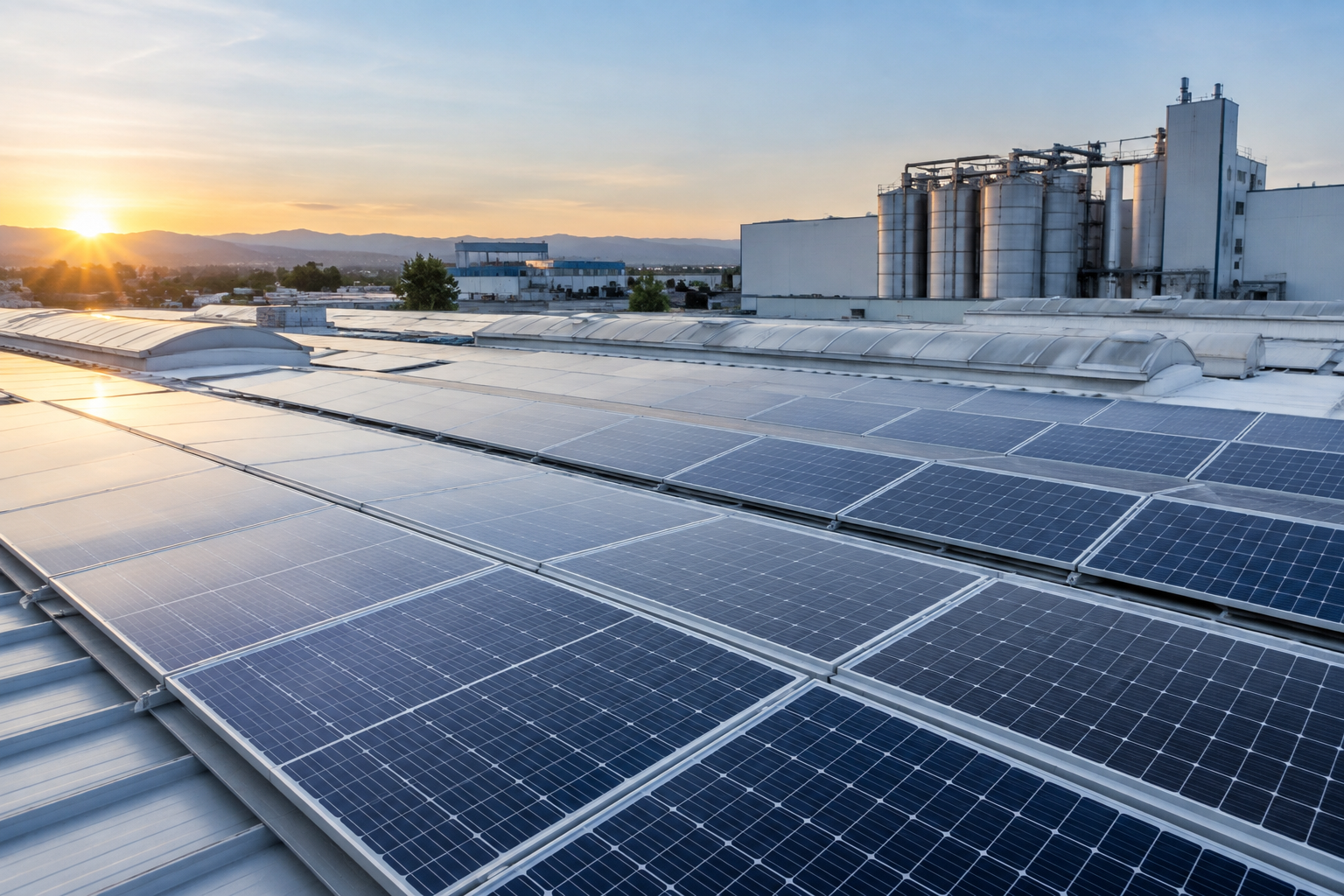
For many businesses, energy costs have become one of the largest operating expenses. Yet industrial buildings and warehouses often have an untapped resource overhead: the roof. A commercial photovoltaic installation generates clean electricity where it is consumed, reducing energy bills, increasing energy independence and strengthening the company’s sustainability credentials with clients and partners.
Start with consumption: self-consumption is key
The first step is not choosing panels, but analysing energy consumption. Reviewing electricity bills and hourly load profiles establishes how much electricity is needed, when it is required and how consistently it is consumed. Businesses operating during daylight hours are ideal candidates, as they can use a substantial share of the electricity generated on site: every kWh generated and consumed on site is one less kWh purchased from the grid.
Assess the roof before designing the system
The roof must be able to support the installation throughout its service life, which exceeds 25 years. The assessment must cover structural load-bearing capacity, the condition of the roof covering, any asbestos requiring removal, orientation and shading. Fire safety considerations must also be assessed from the outset, together with the locations of inverters and switchboards and the cable routes. For older roofs, combining roof replacement with a photovoltaic installation can provide an opportunity to modernise the building.
System sizing and energy storage
A correctly sized installation is not necessarily the largest possible, but the one that maximises self-consumption relative to the investment. Energy storage systems store electricity generated around midday for use as sunlight levels fall, increasing independence from the grid. Battery capacity is selected according to the consumption profile. The design must also take account of the contracted supply capacity, any electric vehicle charging points and future expansion of the facility.
Grid connection and integration with the existing electrical installation
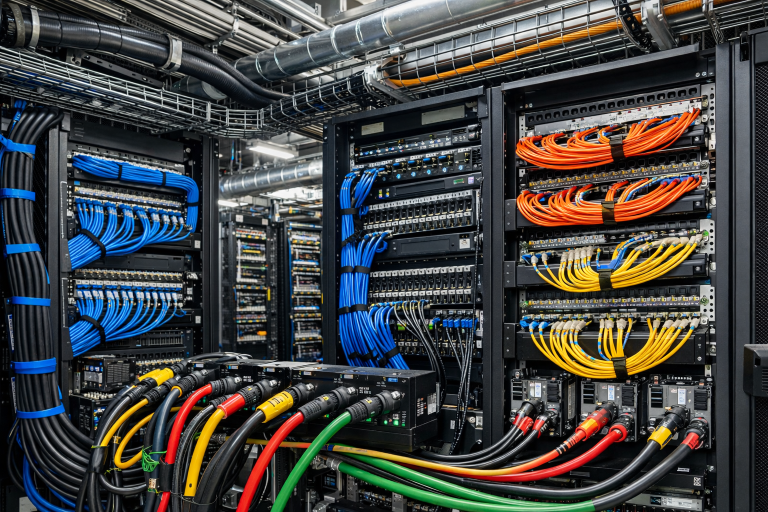
The photovoltaic system must integrate with the facility’s existing electrical installation. Grid connection is governed by CEI 0-16 or CEI 0-21 technical requirements, depending on the supply voltage, and requires completion of the local distribution network operator’s connection process. This often provides an opportunity to upgrade switchboards and the transformer substation, improving the safety and reliability of the company’s entire electrical infrastructure.
Payback periods and incentives
Return on investment depends on electricity costs, the share of generation consumed on site, system size and whether energy storage is included. In production facilities with high daytime electricity demand, payback periods are generally short relative to the installation’s service life. Incentive arrangements, including tax credits and energy communities, change over time and must be assessed on a case-by-case basis. It is therefore essential to start with a feasibility study based on realistic estimates of electricity generation and cost savings.
Monitoring and maintenance
To maintain long-term performance, the installation must be monitored and maintained. A monitoring system flags reductions in electricity generation and inverter faults, while module cleaning, thermographic inspections and connection tightening checks preserve performance and safety. Ohm tech designs, installs and maintains commercial photovoltaic systems, integrating them with the existing electrical installation.
Conclusion
An industrial roof can become one of a company’s soundest investments. A thorough analysis of energy consumption, a roof assessment, correct system sizing and working with qualified professionals provide the foundation for turning photovoltaics into a tangible competitive advantage—reducing costs and supporting a sustainable future.